Book Details

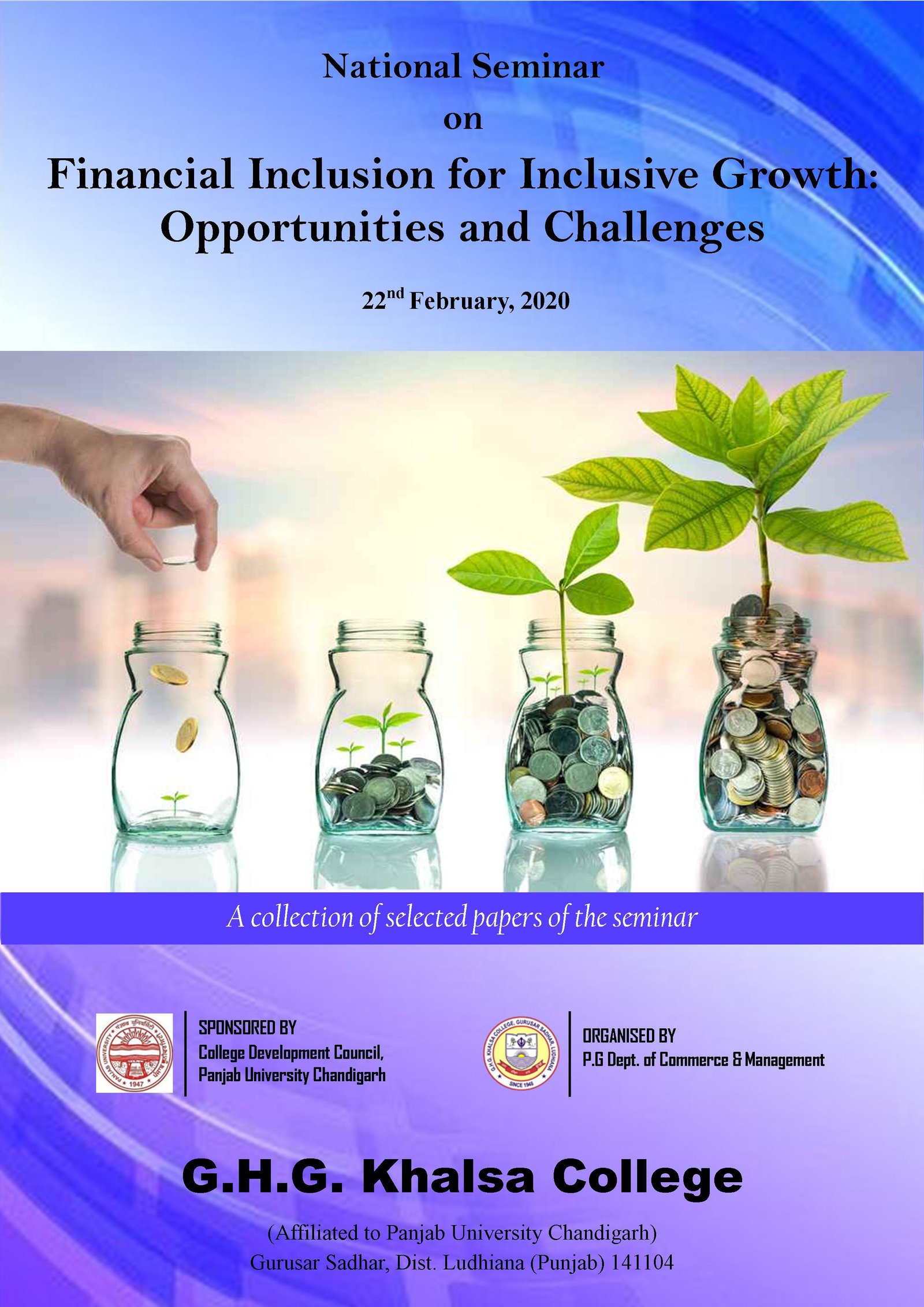
Financial Inclusion for Inclusive Growth:  Opportunities and Challenges

Financial Inclusion for Inclusive Growth: Opportunities and Challenges

CHIEF PATRON: S. Manjit Singh Gill
PATRON: Prof. Jaswant Singh
CHIEF EDITOR(S): Prof. Tejinder Pal Singh, Dr Anubhuti Modgil
Format: Single-Component Retail Product (Book)
Year of Publication: 2021
Publisher Name: National Press Associate

ISBN 978-93-90863-30-3
Price Paperback: ₹1,200.00

About the Book

India is one of the largest and fastest growing economies of the world, but what has been the most disturbing fact about its growth is that it has not only been uneven but also discrete. It has been uneven in the sense that there has been no uniformity in its growth performance, and it has been discrete and disconnected with regard to growth and distribution of growth benefits to certain sectors of economy. And thus, the need for inclusive growth comes in the picture of Indian economic development. However, for attaining the objectives of inclusive growth there is a need for resources, and for resource generation and mobilization financial inclusion is required. It plays a very crucial role in the process of economic growth. Financial inclusion or inclusive financing is the delivery of financial products and services to meet the needs of individuals, businesses and underprivileged sections of the society in an affordable and accessible manner. Global trends have shown that in order to achieve inclusive development and growth, the expansion of financial services to all sections of society is of utmost importance. Ease of access to financial services acts as a critical factor towards transformation of society and economy as a whole by reducing poverty and boosting prosperity. Financial inclusion has been undertaken as a national strategy by countries world over including India. Emerging technologies and innovative techniques are driving financial inclusion. Thus, financial inclusion creates a win-win opportunity for all involved, primarily– the banks/NBFC’s, intermediaries, government and the left-out population.